Storm damage creates pressure to act quickly, but the first priority is safety. Do not climb onto a wet or damaged roof, move under unstable trees or handle electrical hazards. From the ground and inside the home, you can still gather useful information while arranging professional help.
Protect people and limit additional damage
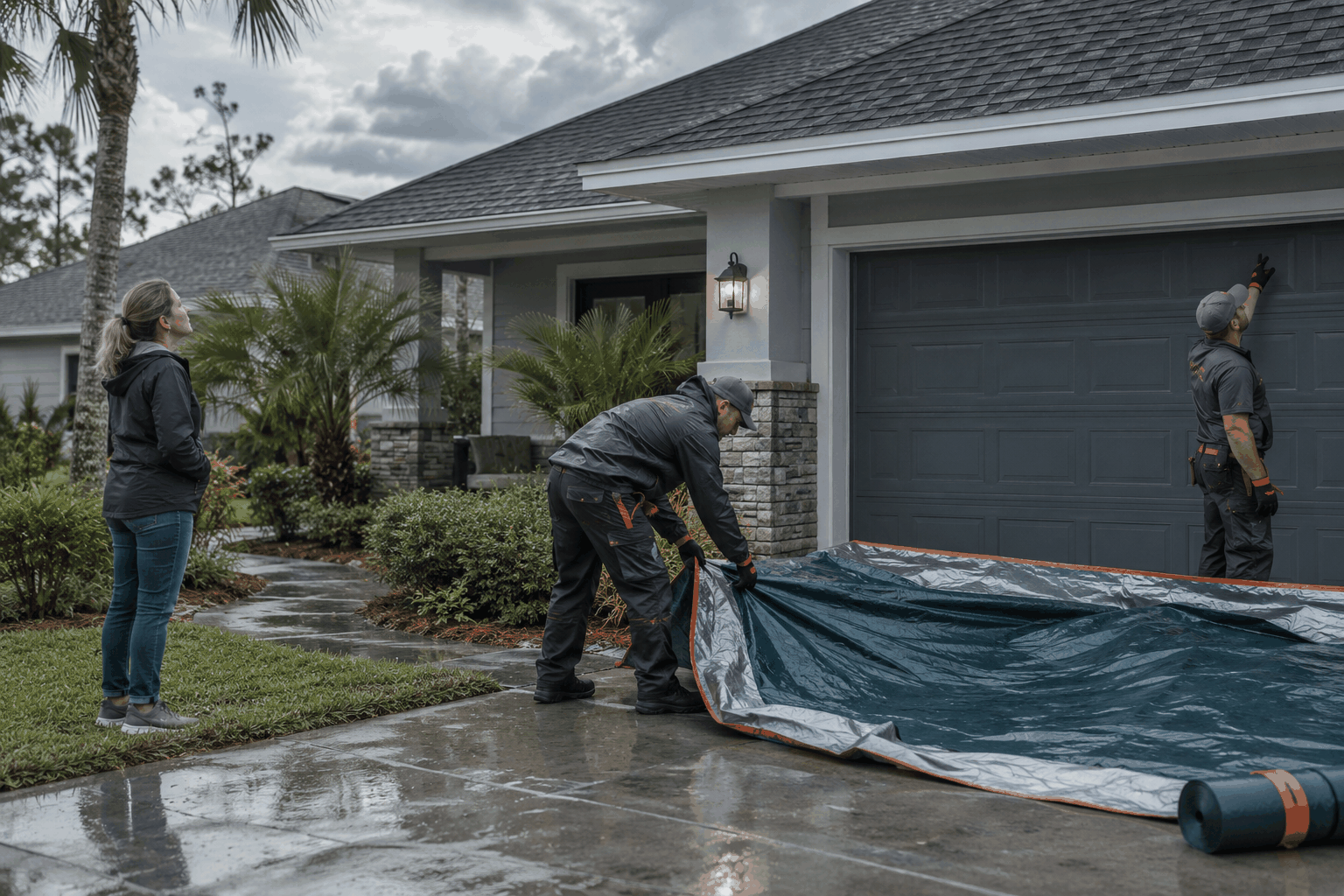
If water is entering near electrical fixtures, keep clear and contact the appropriate emergency professional. Move furniture and valuables away from active water when it is safe. Use containers for drips and place a temporary ground-level covering only when you can do so without creating a fall or electrical risk.
If the roof has visible structural damage, fallen limbs, exposed openings or unstable materials, keep people and pets away from the area. A fast response is valuable only when it is safe to perform.
For an active leak or exposed roof, use the emergency roof repair contact path rather than waiting for a routine inspection.
Document from safe viewpoints
Take date-stamped photographs and short notes from the ground, windows or accessible attic and interior areas. Photograph the room, ceiling, walls, roof edge, gutters, fallen branches and any visible openings. Do not move debris that may be dangerous or climb to get a better angle.
Write down when the storm occurred, when you first noticed the leak, whether the water is continuing and which rooms or systems are affected. This record helps a contractor understand the urgency and creates a useful starting point for the property file.
Understand stabilization versus permanent repair
Emergency stabilization is designed to protect people and reduce additional exposure while the condition is evaluated. It may include temporary protection, debris coordination or a limited repair when the source and safe scope are clear. Permanent repair or replacement requires a fuller review of the roof system and any concealed conditions.
Ask what work is temporary, what is permanent and what should happen next. A clear written scope keeps an emergency decision from becoming an accidental commitment to work you did not understand.
Be careful with insurance conversations
A contractor can document visible construction conditions and provide a scope of work, but a contractor is not a public adjuster. SOS Construction & Roofing does not interpret insurance policies, determine coverage or negotiate claim settlements. Questions about policy coverage or claim representation should go to your insurer, a licensed public adjuster or an attorney.
You can still ask the contractor for photographs, measurements, repair recommendations and a clear separation between emergency work and broader construction work.
Once the immediate risk is controlled, a documented roof inspection can help define the permanent work.
The next best call
When you contact SOS, have the property address, your safe photographs, the location of the leak, the approximate roof age and any information about recent repairs. The team can help determine whether the priority is emergency stabilization, a repair conversation, a replacement estimate or a scheduled inspection.
Same-day response is prioritized when weather, access, safety and crew availability allow. A calm description of the condition helps the team respond with the right level of urgency.
- Keep people away from unsafe roof areas.
- Photograph visible conditions without climbing.
- Record when the leak began and where it appears.
- Ask what is temporary and what is permanent.
- Request a written next-step plan.
If your property has an active leak or storm damage, call SOS for the safest next step and a free estimate when a construction scope is appropriate.
Start a free estimate request →